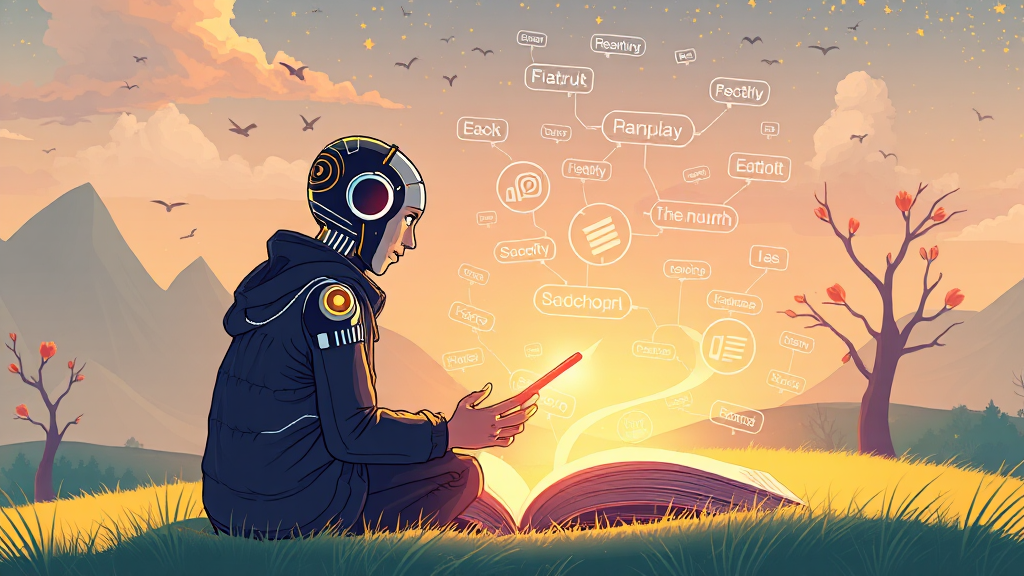
How Roleplay AI Is Reshaping Digital Storytelling and Interactive Fiction
Interactive fiction has long been a niche genre, beloved by readers who want to step inside a story and make choices that shape the outcome. But traditional choose-your-own-adventure books and early text-based games had a fundamental limitation: the narrative branches were pre-written, finite, and often shallow. Today, roleplay AI is removing those barriers, offering dynamic, open-ended experiences that adapt to every user decision. This technology is transforming how we create and consume stories, blurring the line between author and audience.
In this article, we will explore the mechanics behind roleplay AI, its impact on writers and gamers, the ethical questions it raises, and what the future holds for this rapidly evolving medium. Whether you are a seasoned writer, a curious gamer, or simply someone who enjoys a good story, understanding this shift is essential.
What Is Roleplay AI and How Does It Work?
Roleplay AI refers to artificial intelligence systems designed to simulate characters, settings, and narratives in an interactive, conversational format. Unlike scripted chatbots, these systems use large language models trained on vast datasets of literature, dialogue, and human interaction. They can generate responses that are contextually aware, emotionally nuanced, and creatively unpredictable.
When you engage with a roleplay AI, you are essentially co-authoring a story. The AI tracks the narrative state, remembers previous exchanges, and adapts its responses based on your input. This allows for endless possibilities—no two playthroughs are exactly alike. Whether you want to explore a fantasy kingdom, solve a mystery in a noir city, or simply have a heart-to-heart with a fictional character, the AI can pivot to match your tone and direction.
The underlying technology has improved dramatically in recent years. Models like GPT-4 and similar architectures have made it possible for AI to maintain long-term coherence, handle complex dialogue, and even exhibit distinct personality traits. This is a far cry from early chatbots that relied on pattern matching and often veered into nonsensical territory.
Why Writers and Gamers Are Embracing AI Roleplay
For writers, roleplay AI serves as an endless source of inspiration. Stuck on a plot point? You can roleplay a scene with the AI to see how it might unfold. Want to develop a character? Have a conversation with them as the AI. This collaborative process can break through creative blocks and spark new ideas that might never have emerged otherwise.
Gamers, on the other hand, are drawn to the freedom and replayability. Traditional video games have branching narratives, but they are limited by the number of recorded lines and animations. AI roleplay, however, can generate an infinite number of responses, making each interaction feel fresh. This is particularly appealing in genres like open-world RPGs, where players crave meaningful interactions with non-player characters (NPCs).
Moreover, roleplay AI is democratizing storytelling. You don’t need to be a skilled writer or programmer to create a compelling narrative. With a simple prompt, you can set the scene, define the characters, and let the AI take it from there. This accessibility is opening the door for a new generation of storytellers who may have felt excluded by traditional tools.
The Impact on Interactive Fiction and Game Design
Interactive fiction has always been about choice and consequence. But with roleplay AI, the consequences are no longer pre-scripted. The AI can generate outcomes that are surprising, challenging, and emotionally resonant. This shifts the role of the game designer from a scriptwriter to a world-builder, creating systems and rules within which the AI can operate.
Game designers are beginning to integrate AI roleplay into their projects, not as a gimmick, but as a core mechanic. For instance, a detective game might allow players to interview suspects freely, with the AI generating responses based on the suspect’s hidden motivations. A fantasy RPG might feature a companion who remembers your past choices and reacts accordingly, creating a deeper bond between player and character.
This evolution also affects the economy of game development. Instead of spending years writing thousands of lines of dialogue, developers can use AI to generate dynamic conversations on the fly. This reduces production costs and allows for more ambitious projects. However, it also raises questions about quality control and the role of human writers in the industry—a topic we will explore later.
Ethical Considerations and Potential Pitfalls
As with any powerful technology, roleplay AI comes with its share of ethical concerns. One of the most pressing is the potential for deep emotional attachment. Users may form strong bonds with AI characters, which can be beneficial for those seeking companionship, but it can also lead to unhealthy dependencies. It’s important for developers to implement safeguards that encourage healthy use.
Another concern is the risk of reinforcing biases. AI models are trained on human data, which contains inherent biases. If not carefully monitored, roleplay AI could perpetuate stereotypes or produce offensive content. Responsible developers are implementing content filters and bias mitigation techniques, but this is an ongoing challenge.
Privacy is also a critical issue. Conversations with roleplay AI can be deeply personal, and users may share sensitive information. It’s essential that platforms handle this data with the utmost security and transparency. Users should always be aware of what data is being collected and how it is used.
Finally, there is the question of authorship and copyright. If an AI generates a story based on your prompts, who owns the copyright? This is a legal gray area that is still being debated. As the technology evolves, we will likely see new legal frameworks emerge to address these issues.
How to Get Started with Roleplay AI
If you’re intrigued by the possibilities of roleplay AI, getting started is easier than you might think. Many platforms offer free or low-cost access to AI roleplay experiences. You can begin by defining a scenario—perhaps a medieval quest, a sci-fi adventure, or a slice-of-life drama. Then, create a character for yourself and let the AI respond to your actions.
To get the most out of the experience, approach it with an open mind. The AI may surprise you with unexpected twists or emotional depth. Don’t be afraid to experiment with different genres and styles. The more you engage, the better you’ll understand how to guide the narrative.
For those interested in the technical side, there are also tools that allow you to customize the AI’s behavior, such as setting personality traits, memory, and response length. This can be particularly useful for writers who want to maintain a consistent voice for their characters.
As you dive into the world of roleplay AI, you’ll discover a vibrant community of fellow enthusiasts. Many platforms have forums and social features where users share their scenarios, tips, and even collaborate on stories. This sense of community adds a social dimension to what is often a solitary activity.
The Future of Roleplay AI
The future of roleplay AI is incredibly promising. As models become more sophisticated, we can expect even more realistic and emotionally intelligent interactions. We may see AI that can remember entire story arcs across multiple sessions, creating a continuous, evolving narrative. We might also see integration with virtual reality, allowing users to physically interact with AI characters in immersive environments.
Another exciting possibility is the use of roleplay AI in education and therapy. Imagine a history student roleplaying a conversation with a virtual Abraham Lincoln, or a patient practicing social skills in a safe, simulated environment. The applications are vast and varied.
However, with these advances come challenges. We must ensure that AI is used ethically, that it enhances rather than replaces human creativity, and that it remains accessible to all. The conversation around roleplay AI is just beginning, and it’s a conversation we all have a stake in.
Frequently Asked Questions
Is roleplay AI suitable for children?
Many roleplay AI platforms have age restrictions and content filters to protect younger users. However, parents should always supervise and review the content their children are exposed to. It’s important to choose platforms that prioritize safety and have clear guidelines.
Can roleplay AI help improve my writing skills?
Yes, roleplay AI can be a valuable tool for writers. By engaging in interactive storytelling, you can practice dialogue, character development, and plot structure. It can also serve as a brainstorming partner, offering new perspectives and ideas.
Does roleplay AI require any technical skills?
No, most roleplay AI platforms are designed to be user-friendly. You simply type your actions or dialogue, and the AI responds. Advanced customization may require some technical knowledge, but it’s not necessary to enjoy the basic experience.
Are there costs associated with using roleplay AI?
Some platforms offer free tiers with limited features, while others require a subscription for full access. Prices vary widely, so it’s worth researching to find a service that fits your budget and needs.
Can I use roleplay AI for commercial purposes, like writing a book?
This depends on the terms of service of the platform you’re using. Some platforms allow commercial use, while others do not. Always review the licensing agreements before incorporating AI-generated content into commercial projects.