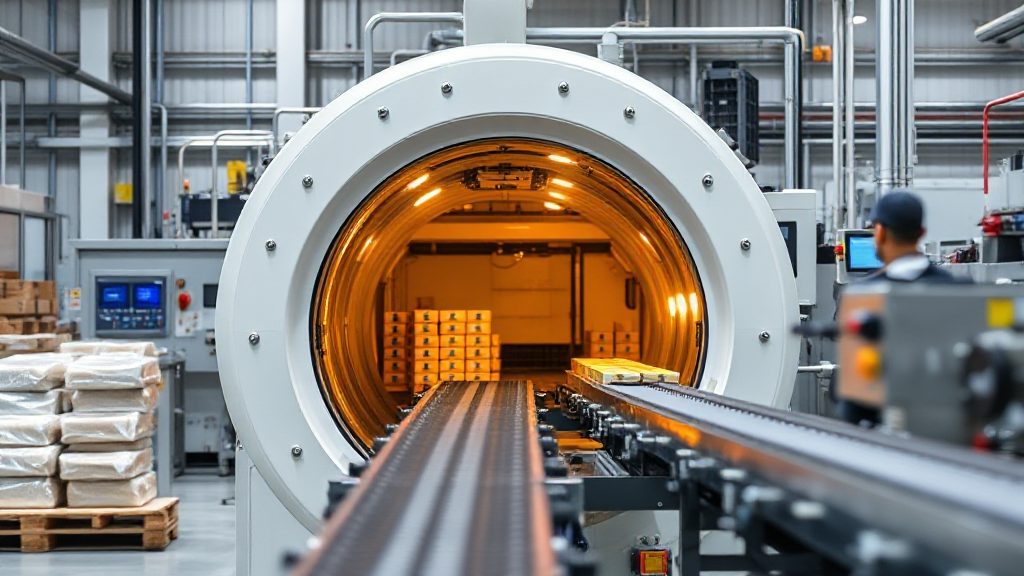
Safety Around Automatic Shrink Wrapping Machines and Tunnels
Last month, a packer on our line reached toward the exit of the shrink tunnel to straighten a misaligned carton. The sleeve had just left the heat chamber, and the radiant heat hit the back of her hand before she touched anything. No injury, no lost time — but a near miss that told us our guarding and training had gaps. That is why I want to walk through the safety hazards of an Automatic Shrink Wrapping machine the way an EHS officer sees them: hazard by hazard, with the safe habit that controls each one.
The short answer to the safety question is this: most incidents around shrink wrapping come from four sources — hot tunnel surfaces, moving sealing bars, unguarded film rolls, and rushed manual intervention. Controls are well known, but they only work when they are verified daily and trained repeatedly.
Heat Hazards at the Tunnel and Sealing Bar
The shrink tunnel is the hottest zone on the line. Film needs roughly 140–180°C to shrink evenly, and the tunnel exit stays hot for several minutes after the machine stops. Operators often underestimate this because the tunnel looks like a simple box.
Surface and radiant heat
Treat every external panel of the tunnel as hot until a contact thermometer says otherwise. Radiant heat at the exit can burn skin even without contact, so the safe practice is to stand clear until the product has fully exited and cooled.
Safe shutdown and cool-down
Write a cool-down step into the lockout procedure. Before any maintenance inside the chamber, isolate power, wait for the manufacturer’s stated cool-down time, and verify with a thermometer. Never rely on the display reading alone.
Moving Parts, Guards and Film Roll Hazards
An automatic machine cycles without an operator at the controls, which means guards and interlocks do the work that a person’s attention used to do. Any guard that is removed and not refitted is a latent failure waiting for the next shift.
Sealing bars and conveyors
The sealing bar closes with force and heat at the same time. Interlocked guards must prevent the bar from closing while the guard is open. Test the interlock every shift — press the guard, confirm the machine stops, and log the result.
Film roll and take-up points
Roll changes are the most common moment for hand contact with moving film. Train operators to stop the machine, isolate the drive where required, and use the film threading path exactly as designed rather than improvising.
Emergency stops
Check that every E-stop is reachable from the operator’s normal position and from the tunnel exit. A stop button hidden behind a pallet is not a control; it is decoration.
Safe Operating Habits and Operator Training
Guards protect against the machine. Habits protect against the human tendency to fix a small problem quickly. The near miss on our line happened because the operator wanted to correct a carton rather than stop the line — a habit problem, not a machine problem.
What good training covers
- Start-up, normal running and shutdown, including cool-down.
- Recognising hot zones and the correct distance to keep at the tunnel exit.
- Roll changes, film threading and jam clearing with the machine stopped.
- Lockout and verification before any guard is opened.
- Reporting near misses, not just injuries.
Daily habits that prevent incidents
Require a pre-shift walk-around: guards in place, interlocks tested, E-stops clear, tunnel exit free of obstructions. Keep the floor around the shrink tunnel Machine dry and free of film scrap, which is slippery and can hide cables.
PPE is the last line, not the first. Heat-resistant gloves help during roll changes, but they do not justify reaching into a running tunnel. If a task requires hands inside the chamber, the machine should be stopped and cool.
Maintenance, Housekeeping and the Safety Checklist
Safety performance around a Shrink wrapping machine is mostly decided before the shift starts — in maintenance schedules, spare parts and housekeeping. A machine that jams often invites risky interventions, so reliability is a safety issue.
Planned maintenance items
| Item | Frequency | Safety purpose |
|---|---|---|
| Interlock and E-stop test | Every shift | Confirms guards stop the cycle |
| Guard inspection | Weekly | Catches missing or damaged panels |
| Thermometer check at exit | Weekly | Confirms cool-down time is valid |
| Wiring and earth check | As scheduled | Reduces electrical and fire risk |
Housekeeping and fire risk
Film scrap, cardboard dust and heat are a poor combination. Keep combustible material away from the tunnel, store film rolls upright, and make sure ventilation around the machine is not blocked by pallets.
Finally, review near misses monthly. The hand that reached for the carton was a warning; the next one may not be.
Frequently Asked Questions
How hot does a shrink tunnel get, and how long does it stay hot?
Operating temperatures typically sit in the 140–180°C range depending on film and speed. The exterior and exit area can stay hot for several minutes after shutdown, so always follow the manufacturer’s cool-down time and verify with a thermometer before maintenance.
Can operators clear jams while the machine is running?
No. Jams should be cleared only with the machine stopped and, where the guard must be opened, with power isolated. Reaching into a running tunnel or near a closing sealing bar is the most common cause of serious hand injuries on these lines.
What should a daily safety check include?
Guards in place, interlocks and E-stops tested, tunnel exit clear, floor dry and free of film scrap, and no combustible material near the heat chamber. Log the results so trends are visible.
Is PPE enough to protect operators?
PPE supports safety but does not replace guarding, interlocks and training. Heat-resistant gloves are useful for roll changes, but they should never be treated as permission to work near hot or moving parts.