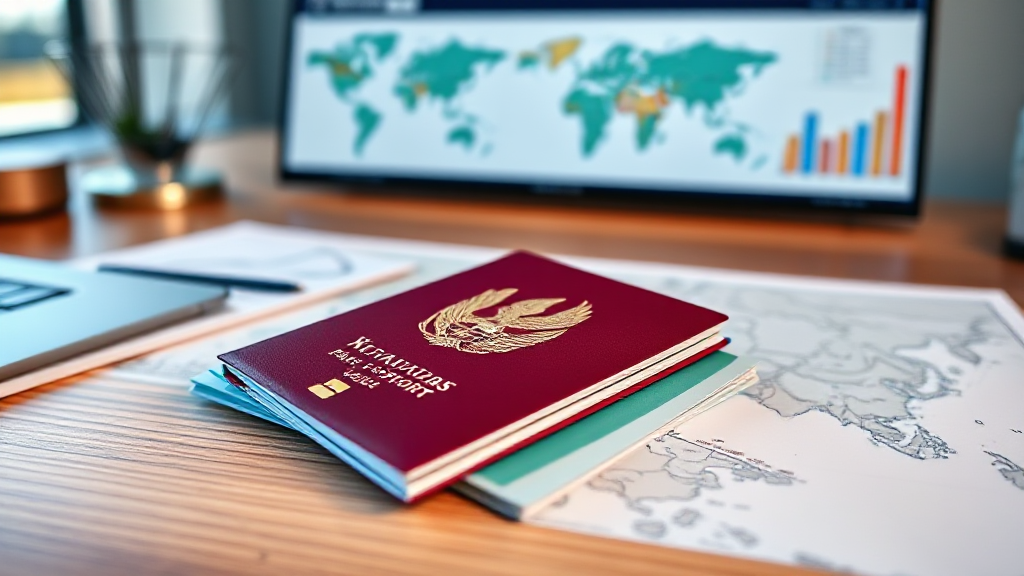
How to Prepare for a Vanuatu Passport Application
Most guides to citizenship by investment start with the price tag. That is the one thing they get right and the one thing they leave incomplete. The figure people quote for a Vanuatu passport is US$130,000, and that number is real, but it is not the first thing you should be thinking about. The first thing is whether your paperwork, your banking history and your travel plans will survive the scrutiny that comes before any payment is made. I went through the process as a reviewer rather than a buyer, reading the public material at https://vanuatupassport.ca/ against what actually gets asked of applicants, and the gap between marketing and preparation is where most people lose time.
What the Vanuatu Passport Actually Gets You in 2026
Vanuatu’s citizenship by investment program grants citizenship, and with it a passport, in exchange for a contribution to the national development fund. The passport currently opens access to around 88 destinations. That is a genuine benefit, but it is a narrower list than the Caribbean programs offer, and it changed in 2023 when Schengen and United Kingdom access were removed. Anyone still working from a 2021 blog post will be planning around a passport that no longer exists.
So the honest framing is this: Vanuatu is fast, it is comparatively inexpensive, and it is useful for visa-free travel across parts of Asia, the Pacific and the Caribbean. It is not a Schengen workaround. If your itinerary is built around Europe, you need a different program, and no amount of preparation will change that. Knowing this before you start saves you the cost of a rejected application and the months you would spend on it.
Documents You Should Have Ready Before You Inquire
The application itself is not complicated. The evidence behind it is. In practice, the due diligence stage is where applications stall, and it stalls because of gaps that were visible months earlier. Before you contact anyone, assemble the following.
First, a passport valid for well beyond the expected processing window, with at least two blank pages. Second, certified copies of birth certificates and, where applicable, marriage certificates, all apostilled or legalised. Third, police clearance certificates from every country you have lived in for more than six months over the past decade. This last one is the most common source of delay, because some jurisdictions take eight to twelve weeks to issue a certificate, and they cannot be rushed.
Fourth, a source-of-funds file. This is not a bank statement. It is a narrative: where the money came from, how it was accumulated, and the paper trail that proves it. Salaried applicants need employment contracts and tax returns. Business owners need company accounts, share registers and dividend records. Property sales need contracts and completion statements. If any part of your wealth arrived through inheritance or a gift, the donor’s paperwork is your paperwork.
Comparing the Preparation Burden Across Routes
There are broadly three ways people approach this. The first is a direct contribution to the development fund, which is the simplest on paper and the one most applicants use. The second is through approved real estate, which carries a higher capital requirement and a longer hold period. The third is a hybrid some agents propose, blending a smaller contribution with an investment component.
On preparation burden, the contribution route is the lightest. You need clean source-of-funds evidence and a straightforward personal history. The real estate route adds property due diligence, title searches and a developer’s track record to assess, which is real work if you are buying from abroad. The hybrid route adds complexity without removing any of the documentation requirements, and complexity is the enemy of a smooth application.
What all three share is the same background check. Your nationality, your travel history and your professional profile all feed into the same assessment. If you have held a passport from a jurisdiction that attracts additional scrutiny, or if you have spent significant time in countries with weak record-keeping, budget extra time. This is not a reason to give up. It is a reason to start earlier than you think you need to.
The Timeline Nobody Advertises Honestly
Advertised processing times for Vanuatu citizenship tend to sit around one to two months. That figure describes the government’s own handling time once a complete file is in front of it. It does not describe the three to five months you may spend gathering police clearances, legalising documents and assembling a source-of-funds narrative that holds up.
Realistically, plan for six months from first serious inquiry to passport in hand. If you have lived in multiple countries, plan for nine. If any of your documentation is in a language other than English or French, add certified translation time to every step. The people who finish quickly are not the ones who paid more. They are the ones who had their file ready before they started shopping for an agent.
Choosing an Agent Without Getting Burned
Vanuatu requires applications to be submitted through an authorised agent, so you cannot bypass this step. That makes agent selection the single highest-leverage decision in the process. A good agent will tell you what you cannot do before taking your money. A bad one will tell you everything is fine and then blame the government when it is not.
Ask three questions. Which licensed agent is actually filing, and can I see the licence? What is your refund policy if the application is declined? And can you show me a redacted timeline from a recent successful file? An agent who cannot answer the third question is not necessarily dishonest, but an agent who gets defensive about it is. Also be wary of anyone who quotes a total cost below the published contribution amount. The contribution is fixed; only the professional fees are negotiable, and fees that look too low usually reappear later as disbursements.
My Recommendation Before You Commit
If you have read this far and your documents are already in order, Vanuatu is a reasonable program for the right traveller. It is fast, the contribution is lower than most alternatives, and the passport delivers real access across Asia and the Pacific. If you are chasing European access, stop now and look elsewhere, because that door closed in 2023 and it has not reopened.
My recommendation is to spend the first month doing nothing but assembling paperwork. Order police clearances, request certified copies, and write the first draft of your source-of-funds narrative before you speak to a single agent. Then read the public material carefully, compare it against your own situation, and only then start the conversation. The applicants who succeed are not the wealthiest ones. They are the ones who treated preparation as the actual work and the payment as the last step rather than the first.